 BACK TO Thought Leadership
RallyGrow Series | Skill #5: Listening
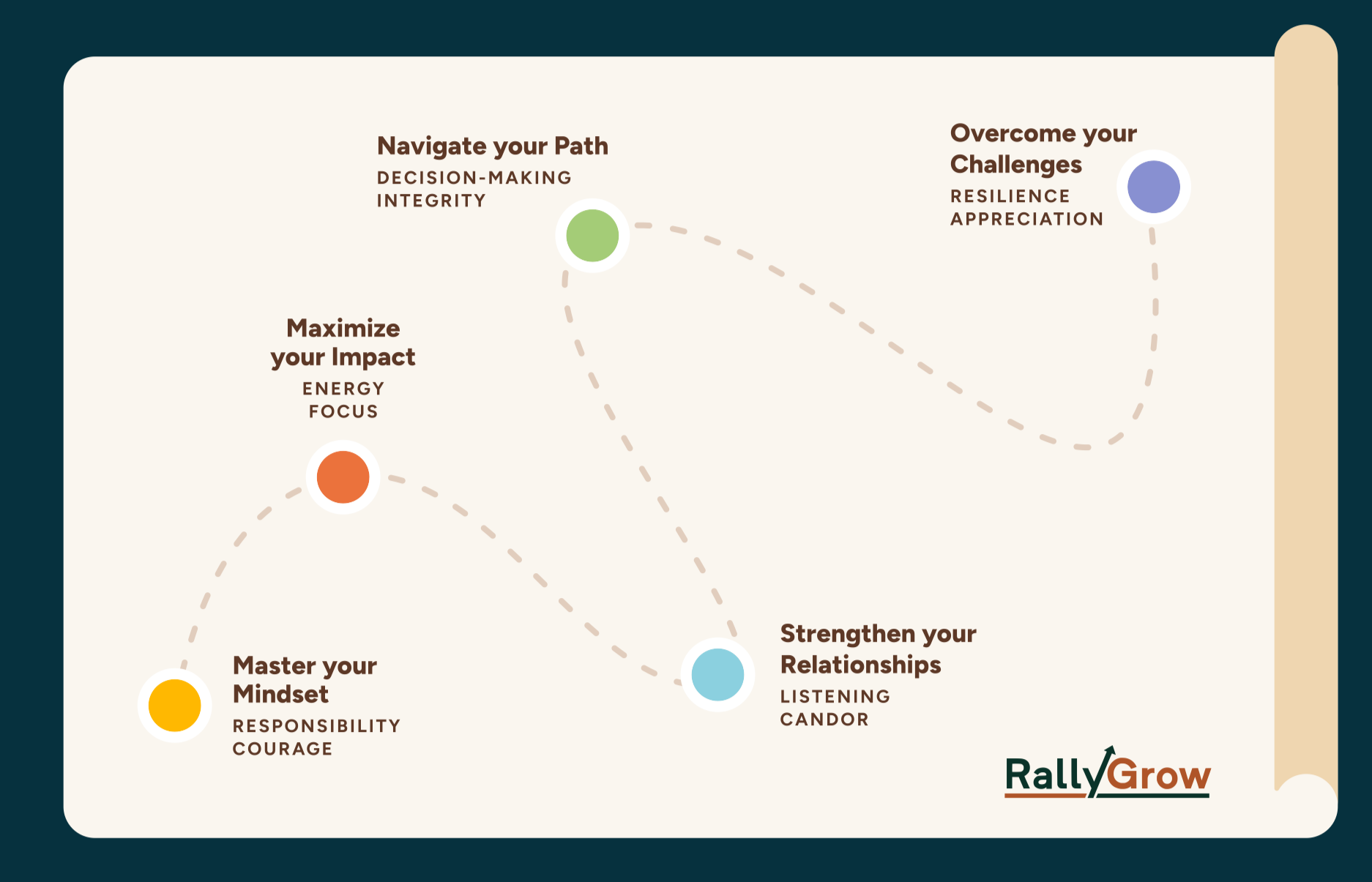
This post is part of our RallyGrow series, covering 10 human skills that drive real impact in life and work.
The Gateway to Trust and Connection
Most people think they’re good listeners. We nod, make eye contact, repeat what we heard. But most of the time, we’re not really listening. We’re preparing our next talking point. We’re checking off mental to-dos. We’re listening to reply, not to internalize and understand.
That’s why Listening is one of the core human skills in RallyGrow’s Strengthen Your Relationships module. When you really listen to someone, something shifts. The conversation slows down. Defenses drop. People feel seen, heard, and valued. And that’s when trust starts to grow.
Levels of Listening
One of the frameworks we cover is the 5 Levels of Listening, highlighted in Stephen Covey’s book The 7 Habits of Highly Effective People. It helps people recognize the gap between where they think they are and where they actually are in conversation.
- Level 1 is ignoring. You’re physically present but mentally checked out.
- Level 2 is pretending to listen, offering just enough head nods and “uh-huhs” to get by.
- Level 3 is selective listening, where you pick and choose what you want to hear.
- Level 4 is attentive listening. You’re focused and present.
- Level 5 is empathetic listening. You’re listening not just for content, but for emotion and intention. You’re tuned into what’s being said and what’s not being said. Level 5 is where real connection happens. It’s not passive. It’s an active, intentional practice. And when you hit that level, people feel it.
Empathy vs. Sympathy
We often confuse the concept of empathy with the concept of sympathy but they are not the same thing:
- Sympathy is acknowledging what the other person is going through and supporting them.
- Empathy goes beyond sympathy by not only recognizing another person's emotions but also sharing and understanding their feelings from their perspective.
Empathetic listening involves listening to both content and context (a concept from The Conscious Leadership Group).
We take this one step further with an Acronym called EMPATHY, from Helen Riess book The Empathy Effect as a teaching tool to assess nonverbal behavior. It’s an easy way to remember the behaviors that build deeper connection through listening.
E - EYE CONTACT, make eye contact long enough to notice eye color; face the person directly.
M - MUSCLES (FACIAL EXPRESSION), Observe genuine vs. forced smiles, furrowed brows, or tension.
P - POSTURE, Upright = alertness; slumped = sadness. Posture reflects emotions.
A - AFFECT (EMOTION). Identify the emotion you sense while listening.
T - TONE, Pay attention to volume, pace, and inflection—it shapes communication.
H - HEARING THE WHOLE PERSON, Listen fully, beyond just the obvious details.
Y - YOUR RESPONSE, Reflect on how the conversation felt and what you took from it.
The beauty of this framework is that it’s simple to apply but powerful in practice. When you start using it, you notice how often you’re only halfway listening. And more importantly, how quickly things shift when you bring your full presence.
For leaders, listening is more than a skill. It’s a signal. When you listen well, you show your team that their voice matters. You create a culture where people don’t just speak up when they’re asked but when it counts. And in a fast-paced, often distracted world, that kind of attention is rare. Which makes it valuable.
Try This
In your next conversation, commit to showing up at Level 5. Put the phone down, close your other windows or tabs down. Pause before responding. Reflect back what you heard. Ask one more question than you usually would. That extra moment of presence might be the difference between someone feeling dismissed or deeply understood.
Listening doesn’t require expertise. It requires intention. And when you get it right, you don’t just hear more. You connect more. You lead more effectively. And you build trust that lasts.
We invite you to explore these concepts more deeply through the resources below.
Quick Hits
Short reads, videos, and podcasts to get inspired and start applying right away.
Deeper Dives
Books and long-form content for when you want to go further into the ideas and practices.
- Read *The Empathy Effect by Helen Riess*
- Read *The 7 Habits of Highly Effective People: Powerful Lessons in Personal Change by Stephen Covey*
Next up, we’ll be talking about Candor!
Interested in learning more or exploring RallyGrow? Email rallygrow@rallydaypartners.com to inquire and request access.


