 BACK TO Thought Leadership
RallyGrow Series | Skill #6: Candor
This post is part of our RallyGrow series, covering 10 human skills that drive real impact in life and work.
Say what needs to be said, without losing trust
Candor gets a bad reputation. Some people think of it as brutal honesty or “just telling it like it is.” Others avoid it altogether, afraid of rocking the boat or hurting someone’s feelings.
But when practiced well, candor is one of the most powerful tools for growth, trust, and connection. It clears the air. It deepens relationships. It opens up space for change.
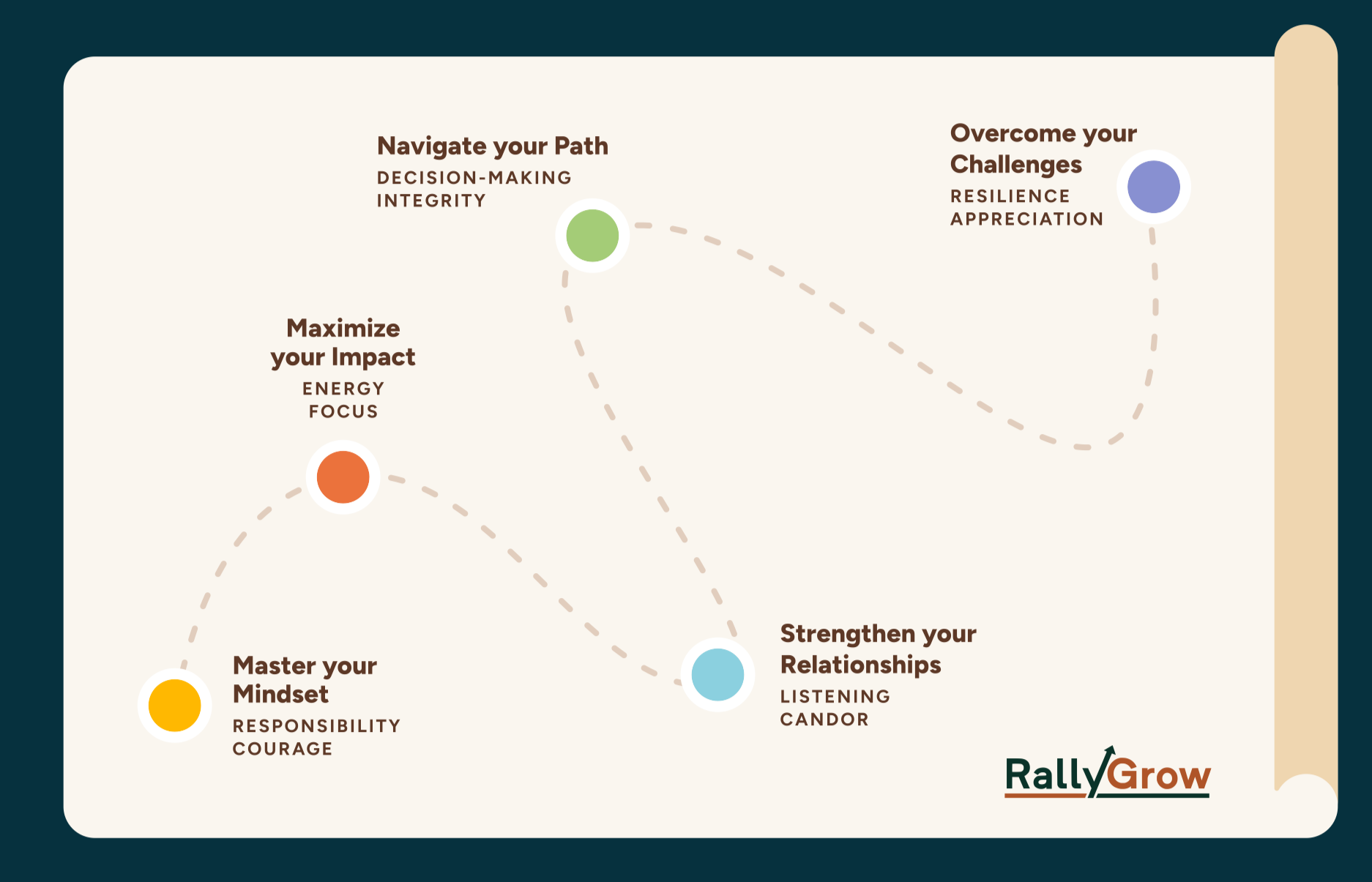
That’s why candor is one of the two skills in RallyGrow’s Strengthen Your Relationships module. Because if listening builds understanding, candor is how we bring our full, honest selves into the conversation.
We start with a simple idea: candor without curiosity is criticism. And curiosity without candor is avoidance. But when you bring them together, you create the conditions for honest, productive dialogue. That’s how we describe the path to better conversations.
Fact vs. Story
We share a simple but powerful distinction that helps people communicate more clearly: Fact vs. Story.
- Facts are straightforward, unbiased pieces of information that everyone can agree on. They are the observable data, what a video camera would capture.
- Stories are the emotional and subjective layers we place over the facts. The story is where bias, assumption, and emotion often live. Stories are how we interpret facts, often shaped by our perceptions, fears, desires, and assumptions.
The moment you can separate those two, you create more room for clarity. You can share your perspective without assuming it’s the whole truth.
The Clearing Model
To help people practice candor in a structured way, we like to share The Clearing Model from Conscious Leadership Group. This tool helps individuals navigate difficult conversations with both honesty and empathy.
It’s designed to help you work through something that’s bothering you and express it in a way that invites understanding.
Here’s how it works.
Step 1: Start with the facts. “What happened?” Then move to the story (Step 2). “What did I make it mean?” Next, acknowledge the feelings (step 3) share how it impacted you. “What did I feel?” And finally, step 4 make a request. “What would I like to be different?”
By moving through this sequence, you avoid blame and defensiveness. You speak your truth with clarity and care. And you invite a real conversation instead of a reaction.
We also explore the Levels of Candor - from withholding entirely to dropping a truth bomb with no care for the fallout. In the middle lies healthy candor: clear, kind, and grounded in relationship. The goal isn’t to say everything you think. It’s to say what matters, in a way that can be heard.
- Level 1: Honesty - The foundation of candor, it begins with eliminating small lies and half-truths.
- Level 2: Openness - Honesty alone isn’t enough if you’re still holding back. Level 2 candor is about sharing all relevant information, even when it feels uncomfortable, and embracing transparency as the default.
- Level 3: Not Attaching to the Outcome - you’re no longer obsessed with being right. You’ve learned to separate facts from personal stories.
This is especially important in leadership. If you hold back too much, people stay in the dark. If you go too hard, they shut down. The sweet spot is candor with curiosity. Direct and respectful. Honest and open. Clear and human.
Something to try
Think of a relationship or conversation where something feels unresolved. What’s the story you’ve been telling yourself about it? What’s the actual facts? And what would change if you cleared the air, not with an intention to be right, but to reconnect?
Candor isn’t about being blunt. It’s about being real. And when done well, it turns hard conversations into deeper relationships.
We invite you to explore these concepts more deeply through the resources below.
Quick Hits
Short reads, videos, and podcasts to get inspired and start applying right away.
- Watch / read more about The Clearing Model: Connective Bridge or Divisive Weapon from the Conscious Leadership Group and download their Clearing Model one-pager
- Watch are you revealing or concealing?
- Reference The Art of Feedback
- Eat Your Own Projections before You Give Feedback
- Learning to Speak Unarguably When Giving Feedback
- Want Deeper Relationships? Have More Candor
Deeper Dives
Books and long-form content for when you want to go further into the ideas and practices.
Next up, we’ll be talking about Decision-Making!
Interested in learning more or exploring RallyGrow?
Check it out for yourself at: rallydaypartners.learnworlds.com
Email rallygrow@rallydaypartners.com with any questions, feedback, or to request our workshop material to lead your own cohort through the course or specific modules.


